
Jennie Denney, AMFT | Therapist in San Clemente, CA
Trauma, Relationships, Grief, Motherhood & Identity
In-person therapy in San Clemente + telehealth throughout California
Jennie Denney, AMFT #153029
Registered Associate Marriage and Family Therapist
Supervised by Rachel Daggett, M.S., LMFT #107858
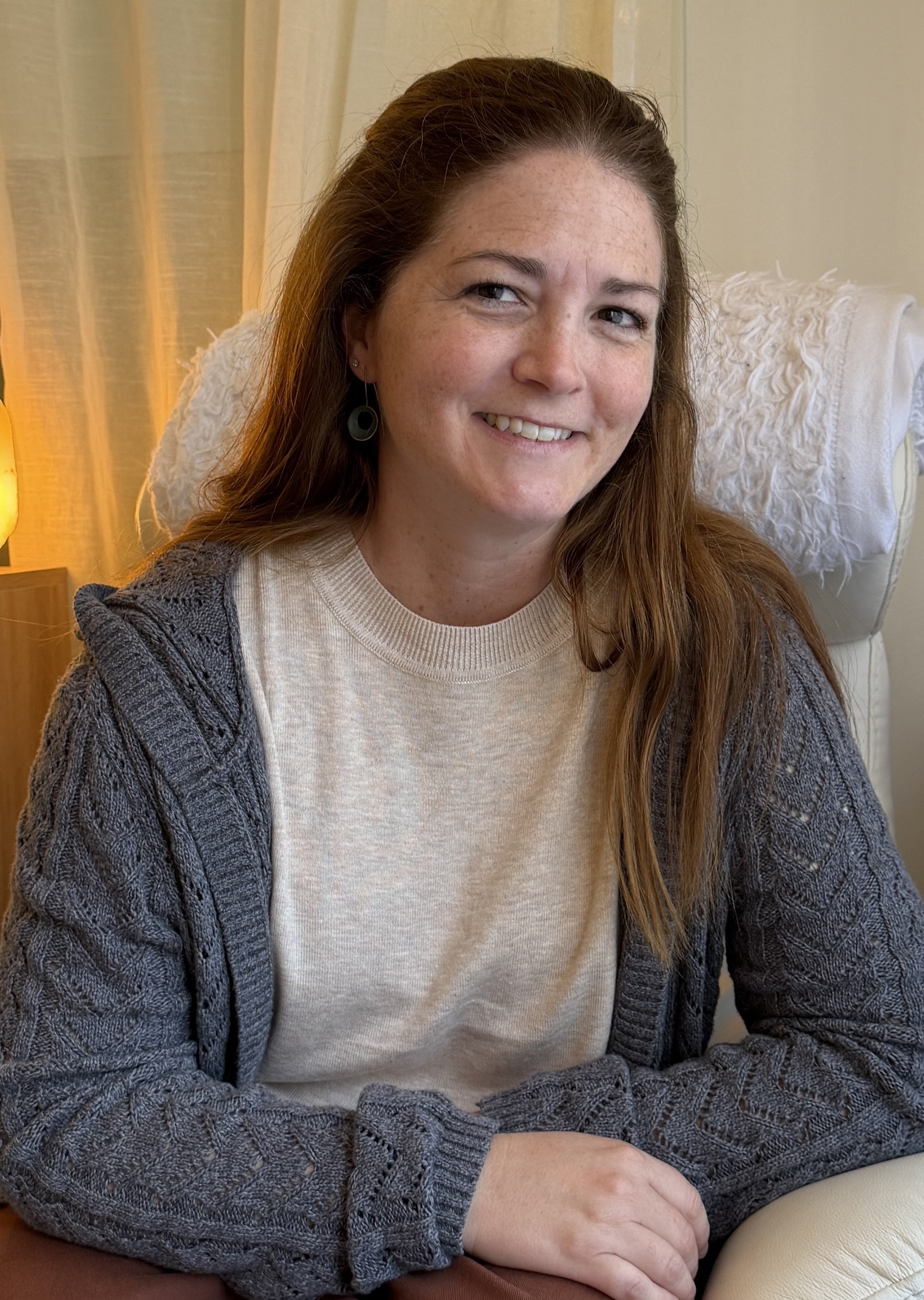
Hi, I'm Jennie.
I'm a therapist, wife, mom of four, and doctoral student. I came to this work with a lot of life already lived and with a deep curiosity about people — who we are, how we became who we are, and how our relationships and experiences continue to shape us.
A lot of the work I love comes back to identity.
We all take on roles along the way. The responsible one. The caretaker. The achiever. The peacemaker. The good daughter. The good mom. The person who doesn't need very much. Some of those roles become meaningful parts of who we are. Others may have helped us belong, stay connected, or get through something difficult, but don't fit quite as well anymore.
I love helping people get curious about those pieces of themselves: where they came from, what purpose they've served, and what they want to carry forward.
The Work I Love
I’m drawn to therapy that goes deeper than managing symptoms.
I do a lot of trauma and grief work, including EMDR, and work with adults who are beginning to understand how their childhood experiences and relationships with emotionally immature parents have shaped them.
I also love working with moms throughout different stages of motherhood. Motherhood has a way of bringing our own histories, relationships, expectations, and identities right to the surface. Sometimes the question becomes not only How do I take care of everyone else? but Who am I in the middle of all of this?
My work also includes parents navigating a child's mental health challenges, couples trying to understand communication and attachment patterns, and people experiencing significant changes in identity, relationships, or faith.
These may look like very different reasons to come to therapy, but underneath them are often similar questions: What has shaped me? What am I carrying? What do I want to do differently? And who do I want to be?
What It’s Like to Work With Me
I’m relational and engaged in the therapy room. I’m not going to sit silently across from you while you wonder what I’m thinking.
I'll ask questions. I'll notice patterns. I'll tell you when I'm seeing something that might be important. Sometimes I'll challenge you. Sometimes we'll laugh. And sometimes we'll stay with something painful long enough to understand it differently.
My approach is attachment-informed, trauma-informed, and attentive to the nervous system. My training includes EMDR, the Gottman Method, and parts-informed work. But I don't believe therapy should feel like someone applying a technique to you.
I want to understand you first.
A Little More About Me
Ryan, and I have been married for over twenty years, and we're raising four kids while building Denney Family Therapy together here in San Clemente.
Before becoming a therapist, I earned a master's degree in Pastoral Studies. My own relationship with faith has changed significantly since then, and those experiences eventually led to my current doctoral research on faith deconstruction and identity transformation.
Motherhood, marriage, loss, changing beliefs, clinical training, and life experience have all influenced the way I understand people.
I don't assume my experiences are the same as yours. They won't be. But they've made me curious about the stories people have inherited about who they're supposed to be, and what can happen when they begin deciding for themselves who they want to be.
Areas of Clinical Focus
Trauma & EMDR · Grief & Loss · Motherhood & Maternal Mental Health · Faith Deconstruction & Identity · Self-Harm Recovery · Relationships & Attachment
Ready to take the next step?
If you’d like to ask questions, share what’s been going on, or get a feel for how I work, you’re welcome to schedule a free 15-minute phone consultation.